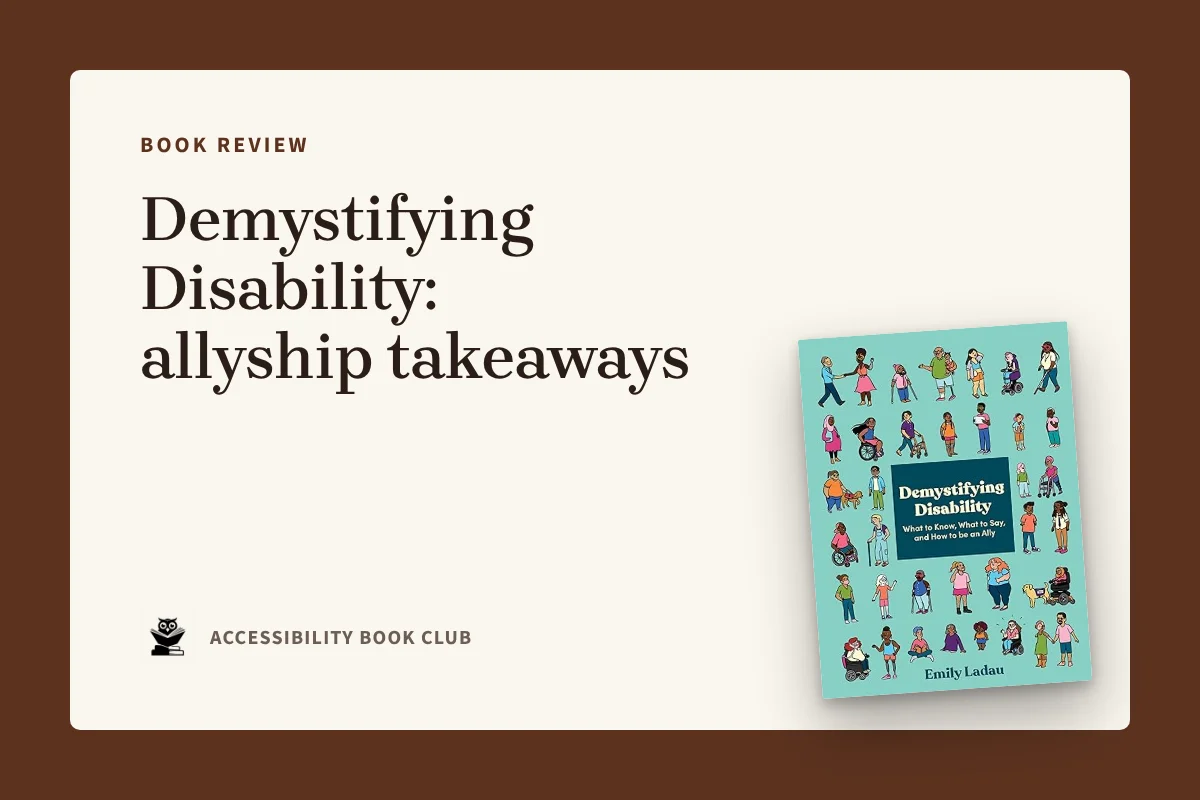
As Emily Ladau closes Demystifying Disability: What to Know, What to Say, and How to Be an Ally, our November 2025 read, she offers one final reminder: finishing this book doesn't make any of us experts on disability.
Disability is a vast, diverse human experience. No single book and no single voice, not even hers, can capture it all. See the book details on our Demystifying Disability book page, and learn more about Emily at Emily Ladau's website (opens in a new tab).
What we can do
- Keep learning
- Stay curious, humble, and open
- Turn that learning into meaningful action, otherwise known as allyship
What allyship really means
Ally is not a title you give yourself
Allyship is something you show through your actions.
Motivation matters
If your desire to help comes from pity, that is condescension, not allyship.
Allies and accomplices
Allies help people live fully within the existing system. Accomplices work with disabled people to challenge and change that system.
Emily's direction for real allyship
- Treat allyship as an ongoing journey. It is never finished.
- Nothing about us without us. Disabled people must lead conversations about their own lives.
- Pass the microphone. Use your privilege to create space, not take it.
- Don't "try on" disability for a day. Lived experience can't be simulated.
- Recognize, credit, compensate, apologize, and keep learning. Always.
Bringing it into our work
For accessibility professionals, "nothing about us without us" means paying disabled people to take part in research and testing. The W3C's guide to involving users in accessibility evaluation (opens in a new tab) is a practical place to start. For more on everyday ableism, read our Disability Is Human review.
This conclusion is not a bow on a finished story. It is an invitation to begin, or continue, the work.
Join the conversation
Which of Emily’s allyship lessons are you putting into practice? Share your thoughts in the Accessibility Book Club LinkedIn group (opens in a new tab).
Author

Crystal Scott, CPWA
Web Accessibility Engineer