
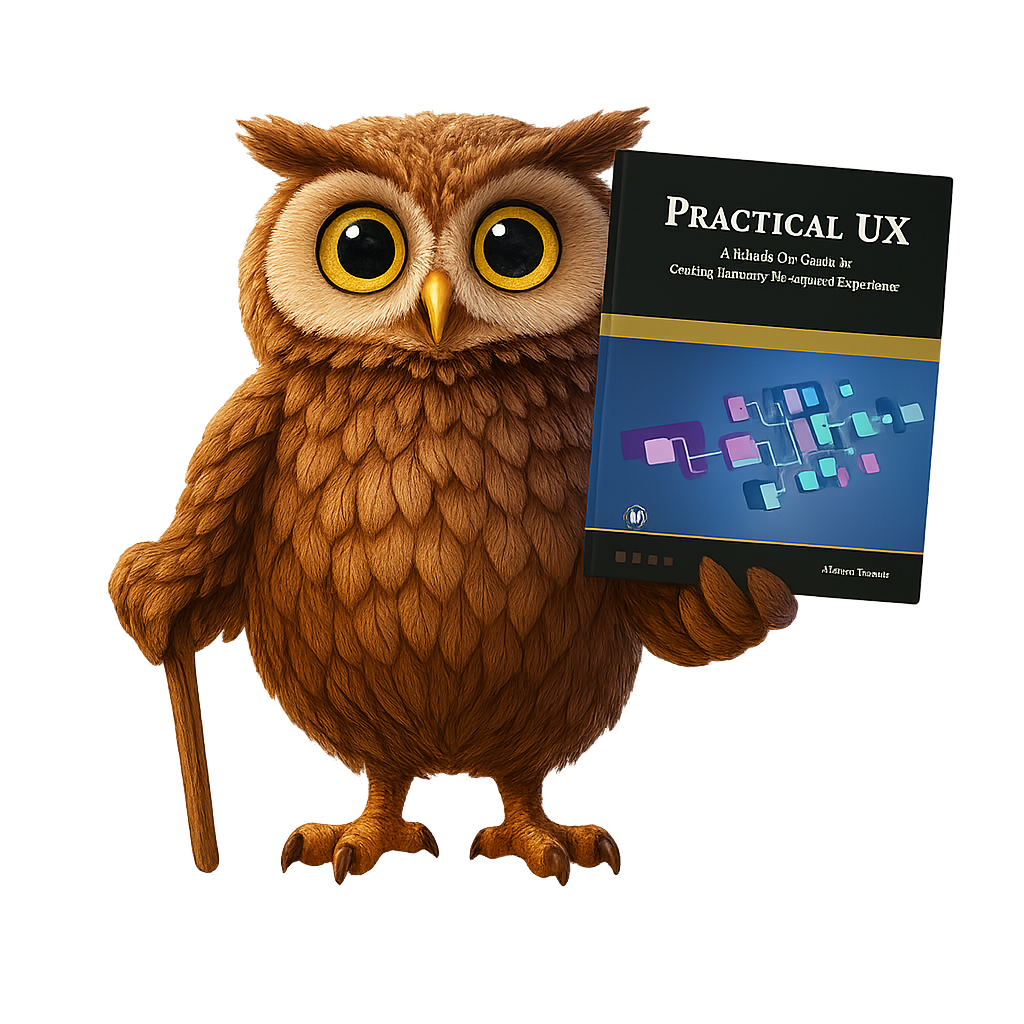
I’m closing out the year by giving Practical UX an 11 out of 10.
This book delivered value, clarity, and perspective on every single page. It is one of the most practical, hands-on resources I’ve read for anyone serious about building real, industry-recognized experience in UX and accessibility.
What makes this book stand out is that it does not stay theoretical. It shows you how to do the work, how to talk about the work, and how to turn that work into a sustainable career.
Website Evaluation Done Right
One of the strongest sections of the book is Chapter 4, Website Evaluation. The step-by-step breakdown of how to evaluate a website for usability and accessibility is incredibly thorough and grounded in real-world practice.
This chapter walks through:
- Understanding the business and its users first
- Identifying user goals and friction points
- Evaluating visual design, content clarity, and structure
- Using a structured evaluation spreadsheet to guide the process
For anyone who has ever wondered what exactly to look for during an accessibility or UX audit, this chapter provides a clear, repeatable framework.
My one critique, offered from the perspective of a WCAG subject matter expert, is that some recommendations lean more toward UX accessibility best practices rather than being perfectly aligned with specific WCAG success criteria. That said, the depth and practicality of the guidance still make this chapter worth the price of the book on its own.
WCAG, Best Practices, and a People-First Lens
One of the most meaningful outcomes of reading this book for me was how it challenged my own thinking.
I have been professionally “married” to WCAG for a long time. My work is typically measured very strictly against success criteria, with best practices layered in secondarily. There were moments in this book where that rigidity was challenged.
Some UX accessibility recommendations did not map cleanly to WCAG, and initially, that was uncomfortable. But sitting with that discomfort was valuable. It reminded me that while conformance matters, people matter more.
WCAG is a framework. It is not the user. This book helped me step back and view accessibility through a more human, experience-driven lens, which ultimately strengthened my own perspective and practice.
Reporting, Presenting, and Communicating Value
The Report and Present chapter is another standout.
The step-by-step guidance for creating a clear, minimal, stakeholder-friendly slide deck is incredibly helpful, especially for anyone who has never reported or presented findings before. The emphasis on visual consistency, clarity, and engagement over decorative design is exactly what non-technical stakeholders need.
I also loved the reframing of issues as opportunities. Accessibility and usability issues are friction points today, but each one represents an opportunity to:
- Improve the experience
- Include users of all abilities
- Re-engage people in revenue-driving actions
Focusing on the top three opportunities, rather than overwhelming stakeholders with every finding, aligns well with how people actually make decisions.
Selling Yourself and Pricing with Confidence
The Sell Yourself to Do the Work chapter was powerful.
Pricing is uncomfortable for many early-career designers, and this book addresses that head-on. The guidance around hourly rates made me reflect on my own pricing, even as someone with years of experience.
Accessibility expertise is rare. It reduces legal risk, improves usability, and supports long-term business sustainability. This chapter reinforced that charging appropriately is not greed, it is alignment with the value being delivered.
This section made me feel seen and validated in my work.
Case Studies That Actually Matter
The final chapter, Create a Case Study, brings everything together.
Instead of encouraging long, process-heavy case studies, this chapter emphasizes:
- Outcomes over output
- Impact over documentation
- Business value over task lists
Most hiring managers and potential clients do not need every step you took. They want to understand what changed, who benefited, and why it mattered.
This chapter gave me several moments of reflection around my own case studies, and I will be updating my website, resume, and LinkedIn profile accordingly.
The Workshop That Brought It All to Life
My absolute favorite part of this experience, though, was the live author workshop hosted by Maigen Thomas for the Accessibility Book Club.
Seeing her bring real-life demonstrations, practical advice, personality, and yes, even her cat trying to steal the show, made the book come alive in an entirely new way. The workshop reinforced how applicable and thoughtful the guidance in this book really is.
The resources and ideas I took away inspired me to create an entirely new web page focused on the accessibility tax credit, which we’ll be using in 2026 to help current and future clients commit to accessibility maintenance. Establishing long-term, strategic partnerships has been a year-long goal of mine, and this book helped me see just how essential that approach truly is.
Final Thoughts
Practical UX is a must-read for anyone who wants to do accessibility and UX work well, communicate it clearly, and build a sustainable career around it.
Thank you, Maigen, for sharing your knowledge with the Accessibility Book Club and with the world. This book is an incredible contribution to the field.
Author

Crystal Scott, CPWA
Web Accessibility Engineer