
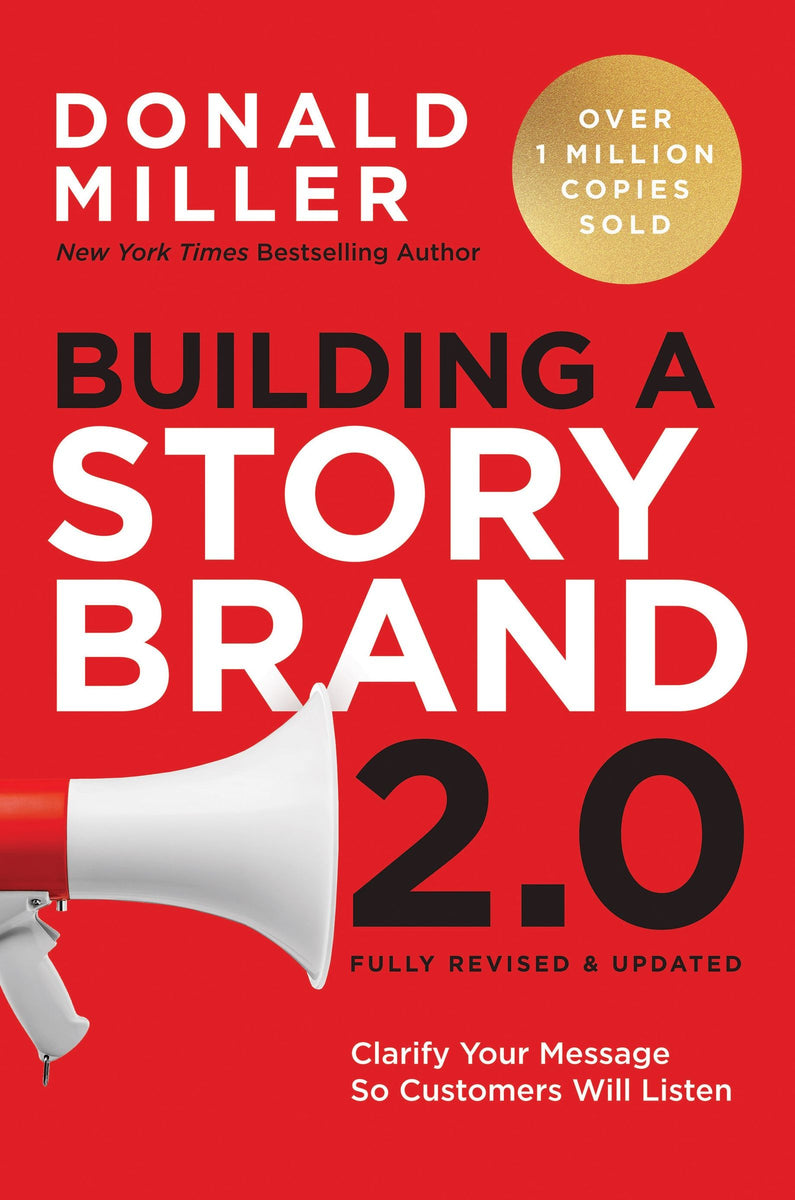
Building a StoryBrand 2.0
Clarify Your Message So Customers Will Listen
Author
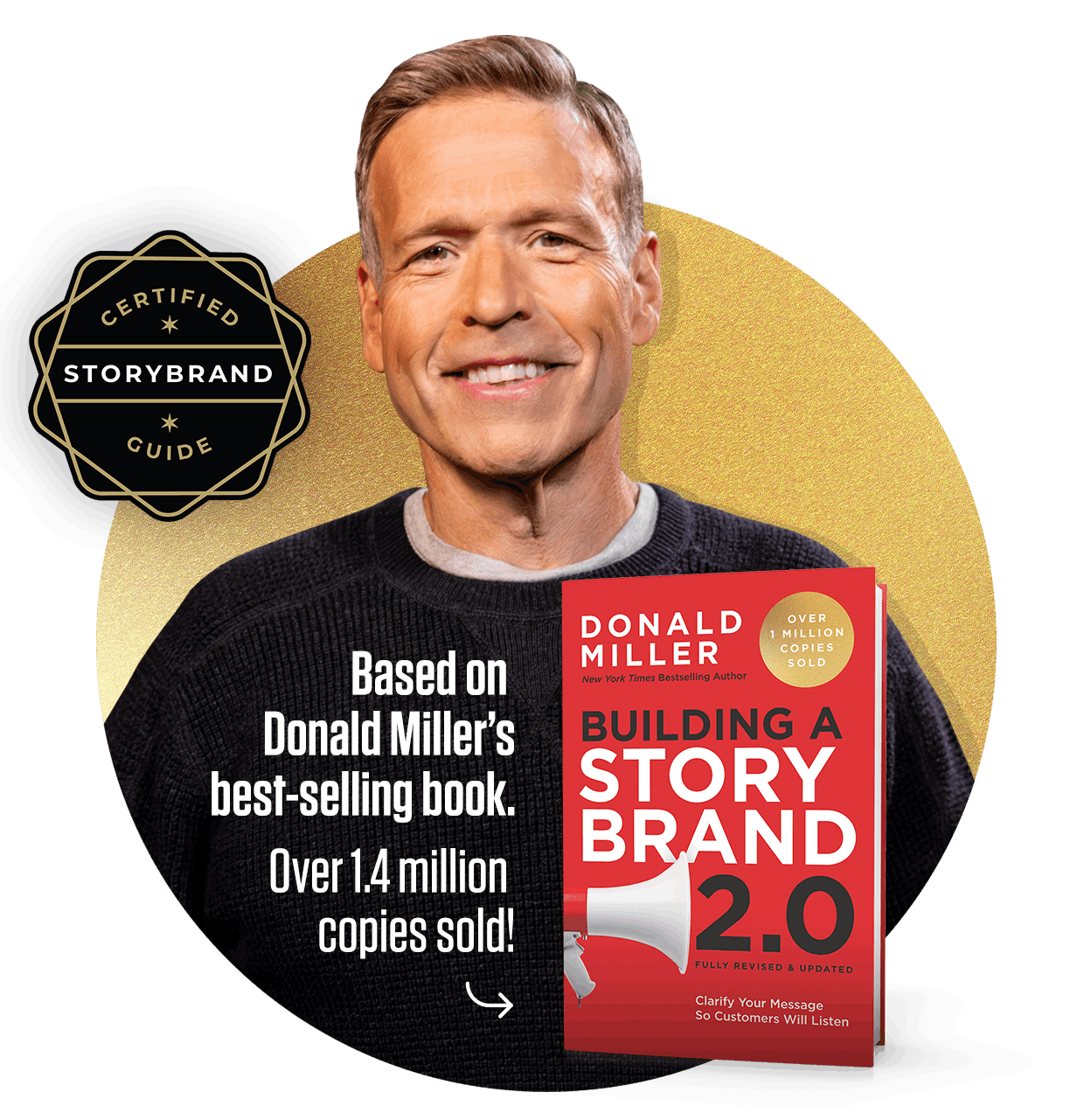
Donald Miller
Founder and CEO, StoryBrand

Author
Details
- Print length 304 pages
- Publication date January 7, 2025
- Available in Hardcover, eBook and Audiobook
Donald Miller's Building a StoryBrand 2.0 is a full rewrite of the 2017 original, built on the idea that the customer is the hero of the story and the brand works best as the guide. Miller walks through seven story elements that show up in almost every film and novel, then maps them onto the messages a business puts on its homepage, in its email, and across its sales material.
This edition updates the examples for how people buy now and adds material on messaging across digital channels. Most of the book sits with the BrandScript, a one-page tool for stating who the customer is, what they want, what stands in the way, and what the brand does about it. Later chapters cover website wireframes, lead generators, nurture email, and the language teams use when they describe their own work.
November is a deliberate turn toward messaging. Clear writing is an accessibility concern: plain, well-structured copy helps people with cognitive disabilities and anyone skimming a page with a screen reader, and it holds up in translation. Reading Miller as a group gives the club shared language for fixing the vague hero sections and jargon-heavy service pages that make sites harder to use.
Why a marketing book is on an accessibility reading list
The 2026 list has leaned technical. November looks at words instead. A page can pass every automated check and still fail the person reading it: the copy is vague, the headings describe nothing, and the call to action hides behind a slogan. Miller's framework is a discipline for stating what you do in language a stranger understands on the first pass.
That work maps onto real success criteria. Headings and Labels (2.4.6) and Link Purpose in Context (2.4.4) are Level AA. Reading Level (3.1.5) sits at Level AAA, which is where a lot of marketing copy quietly fails. Clear writing also lowers cognitive load, survives translation, and holds up when someone skims a page with a screen reader instead of reading it top to bottom.
The SB7 Framework
Miller's seven elements are the chapter titles of the middle section, and they read as one running sentence: a character, has a problem, and meets a guide, who gives them a plan, and calls them to action, that helps them avoid failure, and ends in a success.
- A Character. The customer is the hero of the story. Your brand is not.
- Has a Problem. Miller splits this three ways: the external problem, the internal problem it creates, and the philosophical problem sitting behind it.
- And Meets a Guide. The guide earns trust through empathy and authority.
- Who Gives Them a Plan. Usually three or four named steps.
- And Calls Them to Action. A direct call to action, plus a transitional one for people who are not ready yet.
- That Helps Them Avoid Failure. Name what is at stake if nothing changes.
- And Ends in a Success. Say plainly how life looks afterward.
What goes on a BrandScript
The BrandScript is the single page you produce after working through all seven elements. It collects:
- What the customer wants, and why that want is worth taking seriously
- The external, internal, and philosophical problems, plus the villain behind them
- An empathy statement and a demonstration of authority
- A named process plan and an agreement plan
- A direct call to action and a transitional call to action
- The failure you help people avoid and the success you help them reach
- A tagline drawn from everything above
What changed in the 2.0 edition
StoryBrand describes the rewrite as roughly ten thousand additional words, refreshed examples, and new tools. The structural change worth knowing about is the third section, retitled from "Implementing Your StoryBrand BrandScript" to "Executing Your StoryBrand Messaging and Marketing Campaign" and considerably expanded. A new author's note at the front explains why he went back to a book that was already selling.
The edition also ships with access to StoryBrand AI, a tool Miller built and trained on a decade of StoryBrand material. Worth attention from this club, since anything that generates marketing copy at speed will generate inaccessible marketing copy at speed.
About Donald Miller
Miller is CEO of StoryBrand, Business Made Simple, and Coach Builder, three sister brands under Donald Miller Words, LLC. He lives in Nashville. His publisher counts him as a nine-time bestselling author, and StoryBrand reports more than a million copies of the original edition sold. Named clients include TREK Bicycles, TOMS, and The Economist.
He started as a memoirist. Blue Like Jazz (2003) and A Million Miles in a Thousand Years (2009) came well before Building a StoryBrand (2017). Later business titles include Marketing Made Simple (2020, with Dr. J.J. Peterson), Business Made Simple (2021), How to Grow Your Small Business (2023), and Coach Builder (2024).
Fun facts
- Miller narrates the audiobook himself. The charts and story maps arrive as a companion PDF download, which is worth evaluating on its own accessibility merits.
- Asked why he rewrote a bestseller, Miller told the press: "The problem with the world today is that the wrong people have the microphone."
- The publisher's description of the target reader ends with "or the lead singer of a rock band."
- StoryBrand runs a paid Certified Guide program that licenses consultants to run the framework for clients.
- Page count depends who you ask. Retail listings say 304. The publisher's own galley metadata says 240.
Discussion topics for November
- Run your own homepage through the seven elements. Where does it break?
- Do clear messaging and accessible messaging ever pull in different directions? Bring an example.
- Audit StoryBrand's own materials against what the book preaches: the downloadable BrandScript template, the publisher product pages, the output StoryBrand AI produces. Practicing what you publish is fair game.
- Where does plain language stop being a Level AAA nicety and start being the difference between a usable page and an unusable one?
- The book tells you to name the stakes and name the villain. How do you do that without sliding into inspiration porn when your customer is a disabled person?
Leave a Review for This Book
Every reader’s perspective adds value. Whether this book challenged you, inspired you, or wasn’t your favorite, we’d love to hear about it. Sharing your honest review helps others find books that resonate. All reviews will be published on the book’s page. Your email will stay private.
Thank you for submitting your review! Once it’s been reviewed by our team, it will be published on the book’s page.
We appreciate your contribution to the Accessibility Book Club community.
Discover the power of knowledge through our featured book.
Each book offers an opportunity to learn from industry leaders in the exploration of digital accessibility principles and practices. The titles serve as a vital resource for professionals seeking to enhance their understanding and implementation of industry standards.
Key Themes
Inclusivity, user experience, and practical strategies for accessible design are all taken into consideration when choosing each book.
Accessibility Highlights
We love books that dive deep into accessibility principles, best practices and teach readers common terminology and techniques.


"Knowledge is power." - Thomas Jefferson
Discover Your Next Read or Suggest One for the List
Explore the curated selection of books on our annual reading list. If you do not see a title you think we should read please let us know. Be apart of our vibrant community to enhance your knowledge and skills in inclusive design.
Join the Book Discussion
We want to know more—share your thoughts and insights with fellow members.

Member Feedback
This is what our members are saying about the club:
It brought me closer to the people who really care for accessibility. The Accessibility Book Club has been an incredible space to share ideas, learn from passionate individuals, and grow as an advocate for inclusive design. I also connected with Manuel, the author of Web Accessibility Cookbook, and had the prestigious opportunity to professionally review his book and learn his inspiring story. As someone deeply inspired by accessible design—especially with my mother being a teacher for students with special needs—this community holds a special place in my heart. 💙


Yash Raj Bharti
UXE (front end) Lead
I love the Accessibility Book Club. The participants bring such good questions, and the Club is so thoughtfully organized. Sometimes we talk about care as a value in disability work in ways that can get unarticulated in the context of more technical work. I found Accessibility Book Club to be a great place for smart conversations done with care about access work. I'm incredibly grateful to have had my book read and discussed by this group. Thank you all!


Ashley Shew
Associate Professor of Science, Technology, and Society
I joined the Accessibility Book Club because accessibility is something I care deeply about, and I wanted to connect with others who truly 'get it.' It’s a space where I can learn, and be part of a community that shares my passion for making an impact.


Dr. Nicole L'Etoile, Ed.D.
Learning Experience Designer
I was overwhelmed when I clicked the Zoom link and saw a full screen with faces looking at me. All these people decided to spend time with me and ask questions about my book and accessibility. That’s an experience I will never forget. The Accessibility Book Club is a unique and invaluable initiative I can wholeheartedly recommend.


Manuel Matuzović
Author Web Accessibility Cookbook
I have always wanted to join a book club and was very happy when I discovered one that was about accessibility! Not only does this book club give us the chance to learn more, it also gives us a platform to connect with people passionate about accessibility.


Amber Wilson
Founder & CEO
I joined the Accessibility Book Club after hearing my advisor speak about her book, and I’ve been inspired by the opportunity to discover what this incredible community is reading in the ever-evolving world of accessibility.

Sonal Sathe
Doctoral Student
I recommended the Accessibility Book Club to my daughter, an aspiring UI/UX designer, so she could connect with a community of professionals and access the wealth of knowledge in the books we’re reading. This group isn’t just helping her education—it’s setting her up to be a standout candidate in her future career.

Dana McMullen
Digital Accessibility Trusted Tester and Consultant