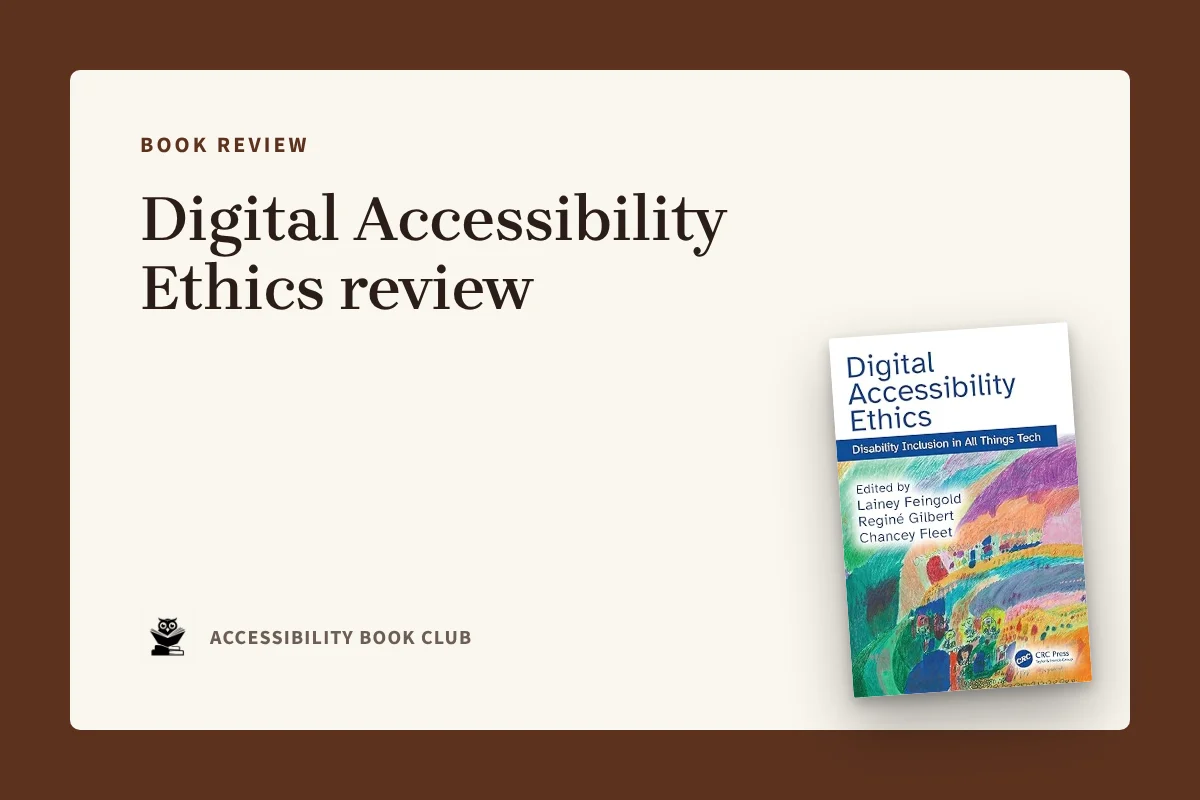
That's a wrap on our May and June 2026 reading of Digital Accessibility Ethics: Disability Inclusion in All Things Tech, edited by Lainey Feingold, Reginé Gilbert, and Chancey Fleet, with 39 contributing authors from 10 countries.
My rating: 10 out of 10
I didn't read every chapter cover to cover, but the chapters I did read were exceptional. The diversity of voices, lived experiences, and practical guidance made this one of the most thought-provoking accessibility books I have read. See the full details on our Digital Accessibility Ethics book page.
The Digital Accessibility Ethics Framework
One idea that keeps sticking with me is the Digital Accessibility Ethics Framework. As the editors write, it is both a tool of disability inclusion and a strategy for reducing risk. That perspective belongs with every designer, developer, product manager, executive, and decision-maker.
Chapters that stayed with me
Cognitive accessibility
Chapter 8, by Margaux Joffe, asks what happens if cognitive accessibility is simply good design instead of a special accommodation. The W3C's cognitive accessibility guidance (opens in a new tab) is a great companion.
Ethical procurement
Chapter 9, by Sheri Byrne-Haber, delivers a refreshingly honest message: don't buy broken things. If you loved her voice, read our Giving a Damn About Accessibility review.
Hackathons, emergencies, and robots
Other chapters asked whether hackathons accidentally teach the wrong lessons about accessibility, how accessibility can be a matter of survival in emergencies, and what happens when a delivery robot meets Haben Girma and her guide dog. Our Haben memoir review tells more of her story.
Accessibility is an ethical responsibility
From cognitive accessibility and emergency preparedness to robotics, public digital amenities, procurement, and inclusive design, this book shows that accessibility isn't a checklist. It is an ethical responsibility that touches every part of technology. Lainey Feingold's Law Office of Lainey Feingold website (opens in a new tab) has more of her work.
Who should read it
If you build websites, software, or digital products, or you lead teams making technology decisions, add this book to your library. Thank you to Lainey, Reginé, Chancey, and all 39 contributing authors for creating such an impactful resource. I am excited to apply these lessons in my own work at Graceful Web Studio and the Accessibility Book Club.
Join the conversation
Which chapter of Digital Accessibility Ethics challenged you most? Share your thoughts in the Accessibility Book Club LinkedIn group (opens in a new tab).
Author

Crystal Scott, CPWA
Web Accessibility Engineer